
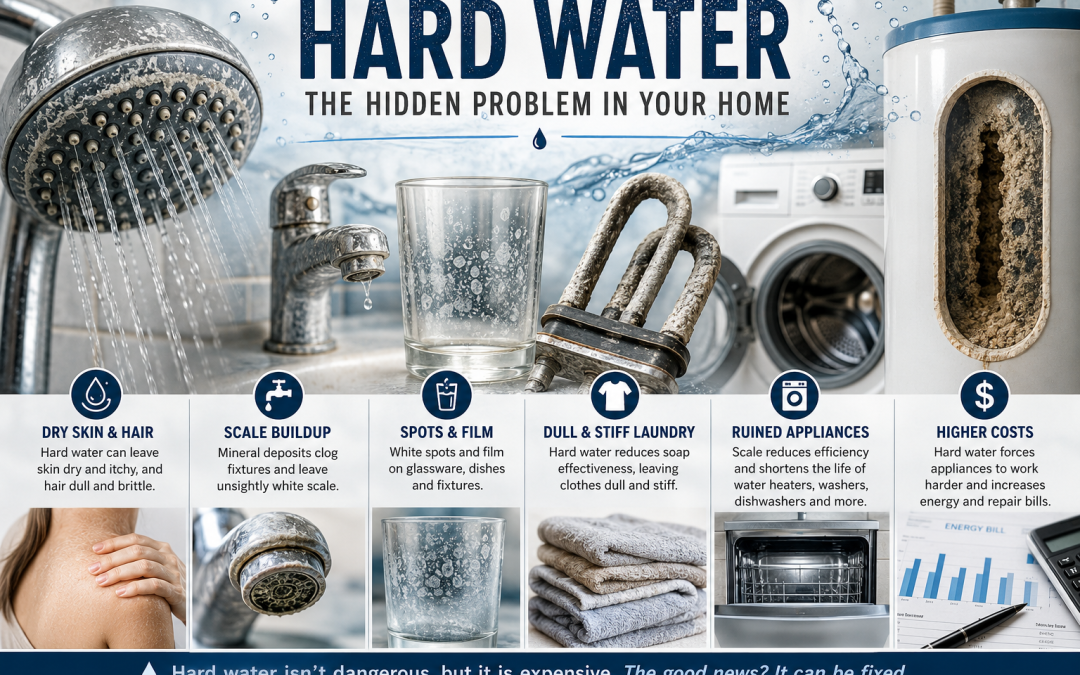
You’ve probably seen the white spots on clean glasses. Or noticed that your showerhead doesn’t spray like it used to. Maybe your skin feels dry after a shower or your water heater seems to run longer than it should. These are common signs of hard water. It’s not dangerous, but it quietly causes extra work and extra costs in a lot of homes in our service area.
This article explains what hard water actually is, how to spot it, and why it matters for your plumbing and appliances. We’ll keep it straightforward.
What “Hardness” Actually Means
Hard water means the water has picked up dissolved calcium and magnesium from the ground. These minerals are natural, but when there’s too much of them, they stick to surfaces and cause problems.
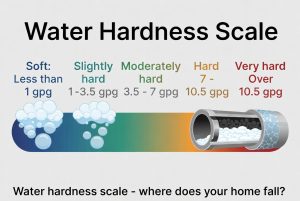
We measure hardness in grains per gallon (gpg) or parts per million (ppm). Here’s the common scale:
- Soft: Less than 1 gpg
- Slightly hard: 1 – 3.5 gpg
- Moderately hard: 3.5 – 7 gpg
- Hard: 7 – 10.5 gpg
- Very hard: Over 10.5 gpg
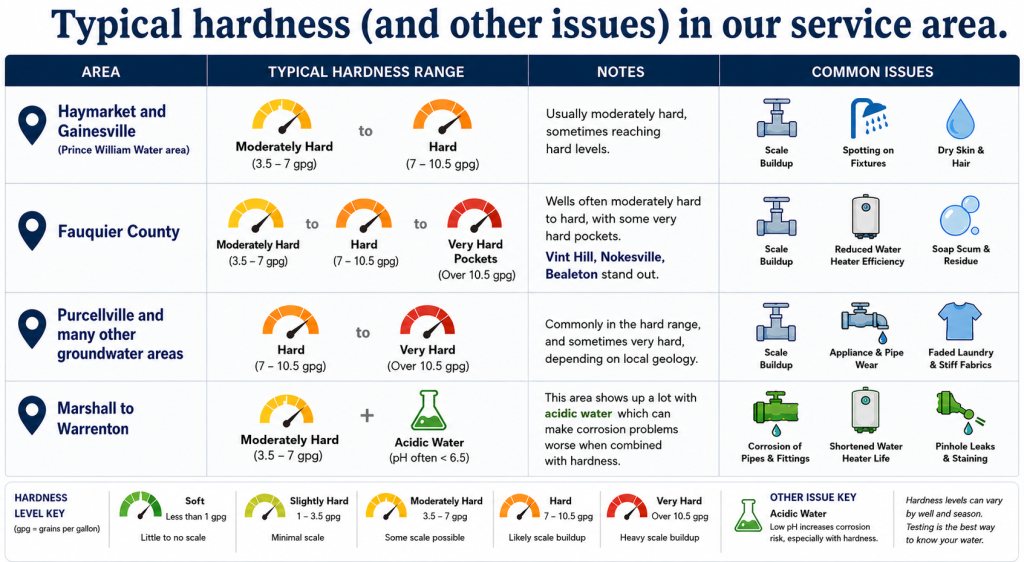
Many homes in our area fall in the moderately hard to hard range. Some spots are much harder. Water near Vint Hill, Nokesville, and especially Bealeton can test as high as 20–54 gpg in places. Your exact number can vary even from one neighbor to the next because of well depth and local geology.
Signs of Hard Water You Can See and Feel
Here are the most common things we see when we visit homes:
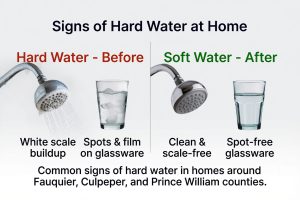
- White or gray scale buildup on faucets, showerheads, and inside pipes and water heaters.
- Spots and cloudy film on glasses, dishes, and silverware even after they come out of the dishwasher.
- Dry, itchy skin and hair that feels dull or frizzy. Soap and shampoo don’t lather as well.
- Dingy or stiff laundry and soap scum rings in the tub or sink.
- Lower water pressure over time as scale builds up inside pipes and fixtures.
- Stains or etching on glass shower doors and fixtures.
We also see a lot of iron in the water around here, which leaves reddish-brown stains. Manganese shows up in some spots too — it causes black staining, especially on porcelain toilets.
If you’re dealing with two or more of these, hard water is likely playing a role.
The Hidden Costs of Ignoring Hard Water
Hard water doesn’t just look bad. It costs money in ways you don’t always notice right away.
Scale inside your water heater makes it work harder, which can increase your energy bill. Appliances like dishwashers, washing machines, and water heaters often wear out faster. You end up using more soap, detergent, and shampoo. Clogged pipes and fixtures can lead to more service calls and repairs.
Hard water also makes our job harder when we change out water heaters or do maintenance — the scale and buildup take extra time to deal with.
Over five or ten years these things add up. A well-chosen treatment system often pays for itself through lower bills and longer-lasting appliances.
Hardness Levels in Our Area
Water hardness varies in the area because of the different water sources:
- Haymarket and Gainesville (Prince William Water area): Usually moderately hard, sometimes reaching hard levels.
- Fauquier County wells: Often moderately hard to hard, with some very hard pockets (Vint Hill, Nokesville, Bealeton stand out).
- Purcellville and many other groundwater areas: Commonly in the hard range because of local geology.
- Acidic water shows up a lot from Marshall to Warrenton, which can make corrosion problems worse when combined with hardness.
Even homes on the same utility can have different levels at the tap. That’s why we don’t rely only on the utility report.
When Hard Water Becomes a Real Problem
Not every home needs to treat hard water. If your hardness is low and you don’t see many signs, it might stay a minor nuisance.
It becomes a real problem when you notice frequent appliance repairs, noticeably higher energy or soap costs, skin and hair issues that don’t improve, or scale that keeps coming back no matter how often you clean. Homes with electric water heaters, large families, or older plumbing tend to feel the effects sooner.
Why Professional Testing Matters
Utility reports give a good picture of the water in the system, but they may not show exactly what comes out of your faucet. We’ve seen real differences from one house to the next.
We test your water for hardness plus other common issues like iron, manganese, pH, and sediment that often show up together. The test helps us recommend the right equipment for your house instead of guessing.
Next Steps
Hard water is common in this part of Virginia, but it’s straightforward to handle once you know what you’re dealing with. Many homeowners notice the difference in their skin, their laundry, and their monthly bills after getting it treated.
If you’re seeing any of the signs above, give us a call. We’ll test your water, explain the results in plain terms, and talk about what actually makes sense for your home — no pressure, no complicated sales pitch.
In the next articles in this series we’ll walk through how water softeners work and what other options are available.
Ready to check your water? Contact us to schedule a test. We’re happy to come out and look at things with you.